
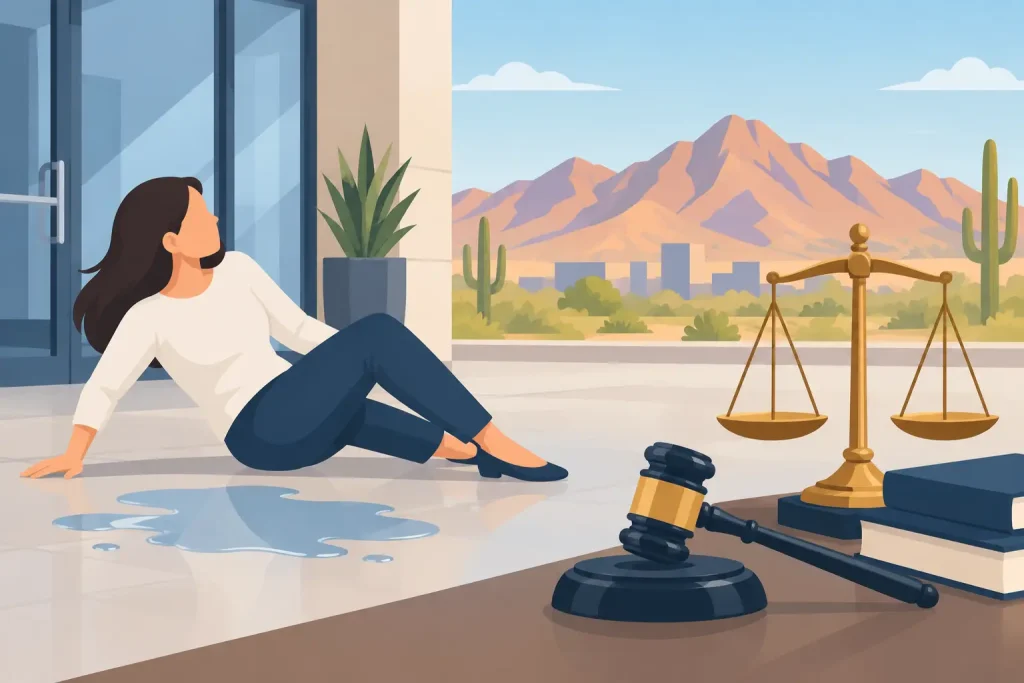
A wet grocery-store floor, broken apartment stairs, poor lighting in a parking lot, or an unrestrained dog can turn an ordinary day into a painful and expensive crisis. This premises liability case guide explains what injured people in Arizona should do after an unsafe-property incident, what evidence matters, and how a property owner may be held accountable.
Property injury claims are rarely as simple as an insurer makes them sound. The owner may deny knowing about the danger. A business may claim the hazard appeared moments before the fall. You may even be blamed for not seeing an obvious problem. The steps you take early can make a real difference in your ability to recover compensation.
What Is a Premises Liability Claim?
Premises liability is the area of injury law that holds property owners, occupiers, and sometimes property managers responsible when unsafe conditions cause harm. The central question is usually whether the responsible party failed to use reasonable care to keep the property reasonably safe or to warn visitors about dangers they knew about or should have discovered.
These cases can arise almost anywhere: retail stores, restaurants, hotels, apartment complexes, private homes, parking garages, construction sites, public walkways, and recreational properties. A claim may involve a dangerous condition that was never repaired, inadequate security, a code violation, debris in a walkway, poor maintenance, or a hazardous condition created by an employee.
A serious injury does not automatically prove liability. The facts matter. So does the reason you were on the property, the nature of the hazard, how long it existed, and what the owner did or failed to do about it.
The First Steps After an Unsafe-Property Injury
Your health comes first. Seek prompt medical care, even if you believe the injury may improve on its own. Falls, head injuries, spinal trauma, and soft-tissue damage can worsen over hours or days. Medical records also create an important connection between the incident and the harm you suffered.
If possible, report the incident before leaving. Ask the manager, owner, landlord, or employee to prepare an incident report, and request a copy. Be accurate, but do not speculate about what happened or minimize your pain. A statement such as “I am okay” can be used later to dispute the seriousness of your injuries.
Photographs and video can be decisive. Capture the hazard from several angles, the surrounding area, lighting conditions, warning signs or their absence, your footwear, and visible injuries. If a fall happened because of a spill, uneven pavement, loose carpeting, or a damaged handrail, conditions can change quickly after you leave. Evidence that is not preserved may be gone by the next day.
Get names and contact information for witnesses. A neutral witness who saw the incident, noticed the dangerous condition earlier, or heard an employee acknowledge the problem can provide critical support when the property owner disputes your account.
Keep the clothing and shoes you wore in a safe place. Do not wash or alter them if they may show contamination, damage, or the conditions involved in the incident. Save medical bills, prescription receipts, missed-work records, and messages with the insurer.
What Must Be Proven in a Premises Liability Case?
A strong claim generally requires proof of four connected issues: duty, breach, causation, and damages. In plain language, the responsible party must have owed you a duty of reasonable care, failed to meet that duty, caused your injury, and left you with measurable losses.
The hardest issue is often notice. For example, if water was on a store floor, the store may argue it had no chance to find and clean it. Evidence may show otherwise. Security video, cleaning logs, employee statements, prior complaints, and inspection records can reveal that the spill existed long enough to be addressed or that the store’s inspection practices were inadequate.
Some hazards are recurring rather than isolated. A leaking refrigerator case, a repeatedly broken gate at an apartment complex, or poor lighting in a parking area may point to an ongoing maintenance failure. Prior incident reports and repair requests can help establish that the danger was foreseeable.
Inadequate security claims require their own careful analysis. If an assault occurs at an apartment complex, hotel, or business, the issue may be whether prior criminal activity, broken locks, missing lighting, inadequate staffing, or poor security procedures made the attack foreseeable. The criminal act does not always erase the property owner’s responsibility.
Common Defenses You May Hear
Insurance companies and property owners have teams trained to protect their financial interests. Expect them to examine every detail of the event, including whether you were distracted, where you were walking, what shoes you wore, and whether the hazard was visible.
Arizona follows a pure comparative fault system. That means an injured person can still seek compensation even if they share some responsibility, but their recovery may be reduced by their percentage of fault. For example, a person found 20 percent at fault for a fall could recover 80 percent of their total proven damages. This is why an early assumption that you were “partly to blame” should not stop you from getting legal advice.
A business may also claim it had warning signs in place, that the condition was open and obvious, or that an independent contractor caused the problem. Those arguments require investigation, not automatic acceptance. A warning cone placed after an injury, a poorly positioned sign, or a contractor relationship may not shield every responsible party.
Compensation After a Premises Injury
A premises liability claim can seek compensation for more than the emergency-room bill. Depending on the injury and available evidence, damages may include past and future medical treatment, lost income, reduced earning ability, physical pain, emotional distress, scarring, disability, and loss of normal daily activities.
The value of a case depends on the severity and permanence of the injury, the clarity of fault, insurance coverage, medical needs, and the impact on your work and family life. A fractured hip, traumatic brain injury, spinal injury, or injury requiring surgery may have consequences that extend well beyond the first course of treatment.
Be cautious with a quick settlement offer. Insurers often make early offers before the full medical picture is clear. Accepting a settlement usually means releasing the claim permanently, even if treatment later becomes more difficult or expensive. It may make sense to resolve a straightforward case early in some situations, but serious injuries deserve a complete evaluation before you sign anything.
Special Rules for Government Property and Rental Homes
Claims involving a city, county, state agency, or public property can carry short and strict deadlines. In Arizona, many claims against public entities require a formal notice of claim within 180 days. Missing that step can prevent recovery, even when the underlying injury is severe.
Rental-property cases may involve landlords, management companies, maintenance vendors, and insurers. Tenants should save written repair requests, photographs, lease documents, and any communications showing the landlord knew about a dangerous condition. Do not assume a landlord’s refusal to fix a known problem is merely a housing dispute if someone has been injured.
Most Arizona personal injury claims have a filing deadline, often two years, but exceptions and shorter deadlines can apply. The safest approach is to speak with an attorney promptly while video footage, witnesses, and property records are still available.
How a Premises Liability Lawyer Can Protect Your Claim
A premises liability case guide can help you recognize the warning signs, but it cannot preserve evidence for you. An attorney can move quickly to request surveillance video, inspect the scene, identify all responsible parties, review maintenance records, and document the full scope of your losses.
At Mingus Mountain Law Group, PLLC, injured people and families receive local, trial-ready representation focused on holding negligent property owners accountable. There is no attorney fee unless a recovery is obtained, so you can get answers without adding another financial burden to an already difficult situation.
If you were hurt on someone else’s property in Prescott, Flagstaff, Sedona, or another Northern Arizona community, protect your health, preserve what you can, and ask for a free case evaluation before an insurer defines the story for you.