
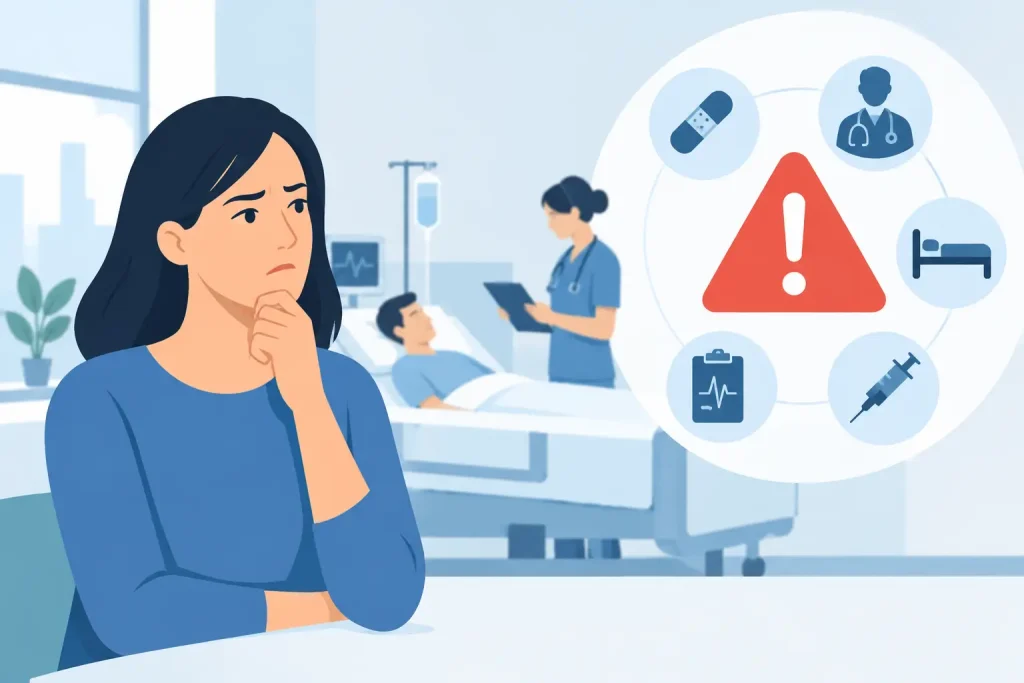
A hospital visit is supposed to bring answers, treatment, and a path toward recovery. When something feels wrong, families are often told it is simply part of the medical process. But certain hospital negligence warning signs deserve immediate attention, especially when a patient’s condition worsens after a preventable mistake, delay, or breakdown in communication.
Not every bad outcome is malpractice. Medicine involves risk, and even skilled providers can face complications they could not reasonably prevent. The question is whether the hospital, doctor, nurse, or other provider failed to meet the accepted standard of care and caused harm as a result. Knowing what to watch for can help you protect your health, preserve critical information, and make informed decisions for yourself or someone you love.
When a Medical Problem Stops Looking Like a Complication
A complication can occur despite appropriate care. Negligence may be involved when a provider overlooks clear symptoms, ignores a known risk, administers the wrong treatment, or fails to act when a reasonable medical professional would have acted.
The difference is rarely obvious in the moment. Patients may be sedated, in pain, frightened, or unable to understand what is happening. Family members are often left trying to interpret conflicting explanations while their loved one’s condition changes. That is why it helps to focus on patterns: unexplained deterioration, repeated errors, missing communication, and resistance to straightforward questions.
Your Condition Gets Worse Without a Clear Explanation
A sudden decline does not automatically prove negligence. But it should be taken seriously when hospital staff cannot clearly explain why a patient is getting worse, what testing has been done, or what the treatment plan is moving forward.
Examples may include a patient developing a severe infection after surgery, suffering breathing problems that are not promptly addressed, or showing signs of internal bleeding that are dismissed for too long. Ask what changed, when staff first recognized the change, what action was taken, and whether a specialist has been consulted. Write down the answers, including the names and roles of the people providing them.
Symptoms Were Dismissed, Delayed, or Repeatedly Ignored
Many serious injuries begin with warnings that were visible before a crisis. A patient reports chest pain, confusion, numbness, fever, severe headache, worsening pain, shortness of breath, or unusual bleeding. Staff may record the complaint but fail to perform needed tests, notify a physician, monitor the patient, or escalate the concern.
A delay can be devastating in cases involving stroke, sepsis, heart attack, internal injuries, blood clots, spinal cord compression, and other time-sensitive conditions. The issue is not whether every symptom required an emergency intervention. It is whether the response was reasonable given the patient’s condition, medical history, and known risks.
Medication and Treatment Errors Are Serious Hospital Negligence Warning Signs
Medication mistakes can happen at multiple points: prescribing, filling, labeling, administering, monitoring, and responding to an adverse reaction. A patient may receive the wrong medication, an incorrect dose, a drug they are allergic to, or a medication intended for another patient.
Pay attention if a nurse seems uncertain about a medication, if the label does not match what the patient was told, or if staff brush off a concerning reaction without checking the chart. Families have every right to ask what a medication is, why it is being given, what dose is being used, and whether it interacts with the patient’s existing prescriptions.
Treatment errors can also involve wrong-site surgery, retained surgical objects, anesthesia mistakes, failure to monitor vital signs, improper use of medical equipment, or premature discharge. These events may be difficult to understand without reviewing the medical record, but a hospital’s vague or shifting explanations can be a sign that closer review is needed.
Poor Communication Can Cause Real Harm
Hospitals rely on teams. Doctors, nurses, specialists, pharmacists, technicians, and discharge planners must share accurate information. When they do not, patients can suffer the consequences.
Warning signs include staff members giving contradictory instructions, no one appearing to know the patient’s diagnosis, test results not being communicated, or important information being lost during a shift change. A patient may be discharged without clear instructions, necessary follow-up care, or warnings about symptoms that require emergency attention.
Communication failures are especially dangerous when a patient has complex needs, limited mobility, cognitive impairment, language barriers, multiple medications, or a history of serious health conditions. These circumstances require more care, not less.
Records That Do Not Match What Happened
Medical records are often central to a hospital negligence claim. They may show vital signs, medications, physician orders, test results, nursing notes, surgical records, and the timing of key decisions. They can also reveal missing entries, late charting, inconsistent notes, or statements that conflict with what the patient and family witnessed.
If you believe something went wrong, request copies of the patient’s medical records as soon as possible. Keep discharge paperwork, prescription bottles, bills, photographs of visible injuries, and any written communications from the hospital. Create a timeline while details remain fresh. Include dates, times, symptoms, names of staff members, questions you asked, and what you were told.
Do not alter records, confront staff aggressively, or rely only on memory. A calm, organized record of events can be far more useful later than a general sense that the care felt wrong.
Pressure to Accept an Explanation or Sign Papers Quickly
After a serious event, a hospital representative may apologize, offer a limited explanation, or ask a family to sign forms. Some documents are routine. Others may affect access to information or relate to a complaint, transfer, discharge, or financial responsibility.
You do not need to make major decisions while you are overwhelmed. Read every document carefully and ask for a copy. Do not sign a release, settlement agreement, or statement assigning blame without understanding its consequences. An early explanation may also change once records are reviewed, specialists weigh in, or the full extent of the injury becomes known.
What to Do if You Suspect Hospital Negligence
Your first priority is medical safety. If the patient is still in danger, ask for the attending physician, charge nurse, patient advocate, or another qualified provider to evaluate the situation. If appropriate, seek a second opinion or arrange transfer to another facility. Do not delay needed care because you are trying to prove what happened.
Once the patient is safe, preserve information and get advice before the evidence becomes harder to obtain. Medical malpractice cases are fact-intensive. They usually require a careful review of medical records and input from qualified medical experts. A poor outcome alone is not enough, but preventable harm caused by substandard care can justify a claim for medical expenses, lost income, pain and suffering, future treatment needs, and other losses.
Arizona medical malpractice claims also involve deadlines and procedural rules. The right course depends on the facts, the providers involved, the injury, and when the negligence was discovered. Waiting too long can make it harder to preserve evidence and protect your legal options.
You Deserve Straight Answers After Preventable Harm
Hospitals and their insurers have resources, legal teams, and internal processes designed to protect the institution. Injured patients and families should not be left carrying that burden alone. If a preventable hospital mistake has caused serious harm in Prescott, Flagstaff, Sedona, or another Northern Arizona community, a free claim evaluation can help you understand what happened and what steps may be available.
Mingus Mountain Law Group, PLLC fights for injured people and families, not hospitals or insurance companies. There is no attorney fee unless there is a recovery. The most useful next step is often simple: protect the patient, keep the records, write down what you know, and get clear guidance before critical evidence disappears.