
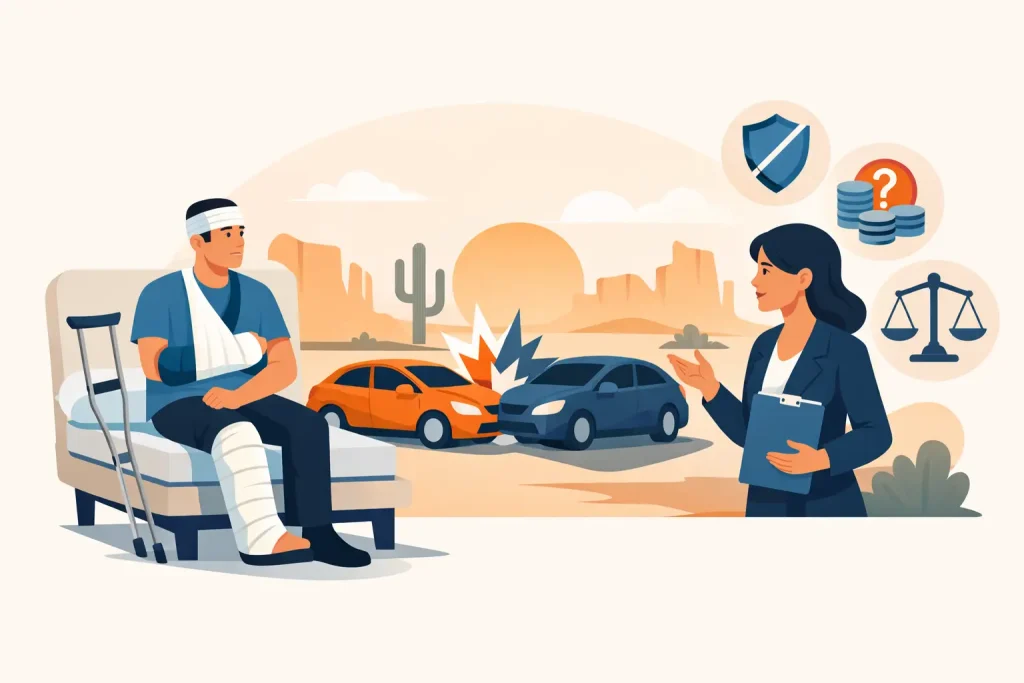
A driver runs a red light, hits your vehicle, and then you learn they have no insurance. The shock of the collision can quickly turn into a second crisis: Who pays for the ambulance, treatment, missed work, and damage to your life? Your uninsured driver injury options may be stronger than you think, but the right path depends on the insurance coverage available, the facts of the crash, and the people or businesses who may share responsibility.
An uninsured motorist claim is not a shortcut or a favor from an insurance company. It is a claim for benefits you paid to have available when another driver fails to carry coverage. For injured people in Northern Arizona, acting early can protect evidence, preserve insurance rights, and put pressure on every responsible party to answer for the harm they caused.
Start With Medical Care and a Clear Record
Your health comes first. Get evaluated promptly, follow your treatment plan, and tell medical providers about every symptom, including headaches, neck pain, numbness, sleep problems, anxiety, and pain that becomes worse over the next few days. Some serious injuries do not fully reveal themselves at the crash scene.
A medical record also connects your injuries to the collision. Insurance adjusters often look for gaps in treatment or statements they can use to argue that you were not badly hurt. You do not need to minimize your pain to sound reasonable. Be accurate, consistent, and honest about how the injury affects your work, household responsibilities, mobility, and family life.
If possible, save photographs of the vehicles, roadway, visible injuries, and any property damaged in the crash. Keep the police report number, names of witnesses, towing information, medical bills, and all letters or emails from insurance companies. These details can matter when fault is disputed or coverage becomes complicated.
Uninsured Driver Injury Options Through Your Own Policy
The first place to look is often your own auto insurance policy. Arizona insurers generally must offer uninsured motorist coverage, commonly called UM coverage, although a policyholder can reject it. UM coverage may apply when the at-fault driver has no liability insurance, cannot be identified after a hit-and-run crash, or has insurance that is unavailable for a valid legal reason.
UM coverage can help compensate an injured driver, passenger, or sometimes family member for losses caused by the uninsured motorist. Depending on the policy and the injuries involved, a claim may include medical expenses, future care, lost income, loss of earning ability, pain, emotional distress, and the ways the injury has changed daily life.
Do not assume you cannot use this coverage because the driver was a friend, a relative, or someone you know. Do not assume you are excluded because you were riding as a passenger, either. Coverage questions depend on the policy language, the vehicle involved, where you lived, and other facts that deserve careful review.
Underinsured Motorist Coverage May Also Matter
Sometimes the other driver carries insurance, but only a small amount. A serious collision can exhaust a low liability policy quickly, especially when emergency care, surgery, rehabilitation, or time away from work are involved. That is where underinsured motorist coverage, or UIM coverage, may help.
UIM is different from UM. It can apply when the at-fault driver’s available liability limits are too low to fully cover your damages. Arizona policies and the interaction between liability limits, UM, UIM, and other available insurance can be technical. Before accepting the at-fault driver’s settlement offer, obtain a full review of your coverage. A premature release can affect your ability to pursue additional benefits.
Medical Payments and Health Insurance Can Keep Care Moving
Medical payments coverage, often called MedPay, may help with medical bills regardless of who caused the crash. The available amount is usually limited, but it can provide useful early assistance. Your health insurance may also cover treatment, subject to copays, deductibles, and potential reimbursement rights later.
Do not delay necessary care because you are worried about how the bills will be paid. At the same time, do not sign repayment agreements, settlement documents, or broad medical authorizations without understanding what they require. The financial side of an injury claim can be managed, but lost medical evidence and delayed treatment can be difficult to repair.
Look Beyond the Uninsured Driver
An uninsured driver is not always the only party who may be legally responsible. A complete investigation asks why the crash happened, who controlled the vehicle, and whether another person’s negligence contributed to the collision.
For example, the vehicle owner may have allowed an unsafe or unlicensed driver to use the car. A driver working for a company or making deliveries may have been acting within the scope of employment. A trucking company, maintenance provider, or vehicle manufacturer may bear responsibility in a commercial vehicle crash. In limited situations, a bar, restaurant, or other alcohol provider may face liability for serving alcohol unlawfully to an obviously intoxicated person or a minor.
Road design, construction zones, defective traffic controls, and poorly maintained vehicles can also require investigation. Claims involving government entities have special notice requirements and shorter deadlines in many circumstances. The lesson is simple: do not let the lack of insurance card at the scene end the inquiry.
Can You Sue an Uninsured Driver Directly?
You can often bring a personal injury lawsuit against the driver who caused the crash. The practical question is whether that driver has assets or income from which a judgment could be collected. Many uninsured drivers have little property, but that should not be guessed at based on appearance, employment, or what someone says after the collision.
A lawsuit may still be appropriate when the driver has collectible assets, when liability is disputed, or when litigation is needed to establish damages for an uninsured motorist claim. It depends on the facts. An experienced injury attorney can evaluate whether pursuing the driver is likely to produce a meaningful result instead of creating unnecessary cost and delay.
Arizona also has deadlines for injury claims. In many cases, the general deadline to file a personal injury lawsuit is two years from the date of injury, but exceptions exist. Insurance policies can have notice and cooperation requirements that arise much sooner. Waiting until the deadline is close can make it harder to obtain video footage, witness testimony, phone records, vehicle data, and other evidence that may disappear.
What Not to Do After an Uninsured Crash
Insurance companies may contact you quickly, sometimes before you understand the full extent of your injuries. You can report the collision and provide basic facts, but be cautious about recorded statements and early settlement offers. The value of a claim cannot be measured fairly while you are still learning whether you will need surgery, therapy, work restrictions, or long-term care.
Avoid posting details of the crash, your activities, or your medical condition on social media. Even an innocent photograph can be taken out of context. Also avoid repairing or disposing of the damaged vehicle until photographs, inspections, and evidence preservation needs have been considered.
Most of all, do not accept the statement that there is “nothing to recover” simply because the driver was uninsured. That statement often ignores UM or UIM benefits, MedPay, household policies, employer coverage, and claims against other negligent parties.
Get Answers Before the Insurer Controls the Story
A strong uninsured motorist claim requires more than submitting bills. It requires proof of fault, proof of injuries, a complete accounting of financial losses, and a clear presentation of how the crash has affected your life. When an insurer refuses to be fair, the claim may require determined negotiation, arbitration, or litigation.
Mingus Mountain Law Group, PLLC represents injured people, not insurance companies. Our team can investigate the crash, identify all available insurance, handle adjuster communications, and pursue the maximum compensation supported by the evidence. There is no attorney fee unless we recover compensation for you.
After an uninsured-driver crash, you do not have to solve every coverage question from a hospital bed or your kitchen table. Get medical care, protect the evidence, and seek a clear legal evaluation before anyone pressures you to settle for less than your injury has cost.