
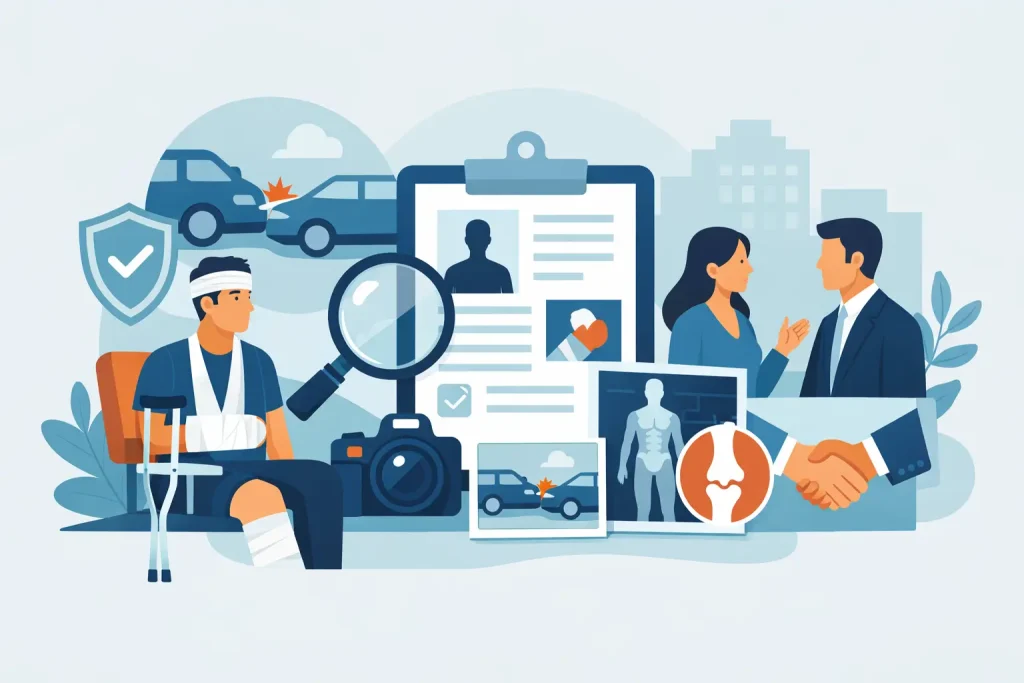
The hours and days after an injury can feel chaotic. You may be in pain, getting calls from insurance adjusters, missing work, and wondering what evidence helps a personal injury claim when you are just trying to get through the week. The short answer is this: the best claims are built on clear proof of how the incident happened, who caused it, and how the injury changed your life.
That proof is not limited to one document or one photograph. Strong injury claims are usually won by putting together a full picture. A police report may support your version of events, but it rarely tells the whole story. Medical records may confirm your injuries, but they do not always explain how deeply those injuries have affected your work, your family, and your daily routine. The strongest case is often the one backed by multiple types of evidence that work together.
What evidence helps a personal injury claim most?
The most useful evidence usually falls into three categories: liability evidence, damages evidence, and timeline evidence. Liability evidence shows how the other party acted carelessly or wrongfully. Damages evidence shows the physical, financial, and emotional harm you suffered. Timeline evidence connects the event to your injuries and helps prevent the insurance company from arguing that something else caused your condition.
In a car crash, for example, liability evidence might include scene photos, vehicle damage, witness statements, black box data, and the crash report. Damages evidence could include emergency room records, orthopedic treatment notes, imaging results, prescription records, and proof of lost wages. Timeline evidence may include records showing you sought treatment right away and followed medical advice consistently.
Insurance companies look for gaps, inconsistencies, and excuses to reduce value. If the evidence is scattered or incomplete, they often use that against you. If the evidence is organized and credible, your position gets much stronger.
Photos and video can shape the entire claim
Visual evidence matters because it captures conditions before they change. Skid marks fade, vehicles get repaired, bruising heals, and dangerous property conditions get fixed. A few clear photos taken early can end up carrying serious weight later.
If you are physically able, photographs of the scene, your injuries, property damage, road conditions, weather, broken stairs, spilled liquids, a loose dog gate, or anything else tied to the incident can be valuable. Video is often even better because it gives context. In some cases, surveillance footage, dashcam footage, or nearby business security video becomes one of the most important pieces of evidence in the case.
There is a trade-off here. Photos help, but they do not interpret themselves. A picture of a damaged bumper does not automatically prove the force of impact or the full extent of a spinal injury. That is why visual evidence works best when it is paired with medical records, witness accounts, and other documentation.
Why timing matters with visual evidence
Early images are usually more persuasive than photos taken much later. They show the scene as it actually was, not after cleanup or repairs. If a business owner fixed a hazard the next day, that does not erase what happened, but it may make later proof harder to gather.
Medical records are the backbone of damages
If there is one category of evidence that appears in almost every successful injury claim, it is medical documentation. Records from the ER, urgent care, your primary doctor, specialists, physical therapists, surgeons, and imaging centers help prove both the existence and severity of your injuries.
These records do more than show that you were hurt. They create a timeline. They connect symptoms to the event. They document your pain complaints, diagnoses, treatment plan, progress, setbacks, and future needs. In serious cases, they may also support claims for permanent impairment or long-term limitations.
Consistency matters. If you delay treatment or stop care without explanation, the insurer may argue that your injuries were minor or unrelated. That does not mean every delay destroys a case. Real life gets in the way. Some people wait because they hope the pain will pass or because they are worried about cost. But from a claim standpoint, prompt evaluation and steady follow-through usually help.
Your own notes can support the medical file
Medical records are critical, but they may not fully capture your day-to-day struggle. A simple journal can help fill in the human side of the case. Notes about missed sleep, trouble driving, difficulty lifting your child, panic after a crash, or pain that interferes with work can support your claim for noneconomic damages.
That journal should be honest and specific. Exaggeration can backfire. Credibility is one of the most valuable assets in any personal injury case.
Witness statements can strengthen disputed claims
Neutral witnesses often carry weight because they usually have no stake in the outcome. If someone saw a driver run a red light, watched a store employee ignore a spill, or heard a dog owner admit the animal had bitten before, that testimony can become very important.
Witnesses are especially helpful when the other side denies fault. They can also help preserve details you may not have noticed in the moment. Names and contact information gathered early are best because memories fade fast.
Not every witness is equally strong. A close family member can still be useful, especially on the issue of how the injury affected your life, but insurers tend to treat independent third parties as more objective. That is one reason immediate investigation can matter in serious cases.
Official reports can help, but they are not the final word
Police reports, incident reports, animal control reports, OSHA records, and other official documents can support a claim by recording what was reported at the time. In many cases, these reports identify the parties, note injuries, document visible conditions, and include initial statements.
Still, these reports are not perfect. An officer may not witness the event. A report may contain mistakes. An insurance company may try to cherry-pick one line that seems favorable to its defense. That is why reports are useful pieces of the puzzle, not automatic proof that wins the case by itself.
Proof of lost income and financial damage adds real value
A personal injury claim is not only about medical bills. If you missed work, used sick leave, lost overtime, turned down jobs, or can no longer do the same kind of work, that financial harm should be documented.
Pay stubs, tax returns, employer letters, attendance records, invoices, and business records can all help prove lost income. For self-employed people, the proof can take more effort, but it is still possible to build. The goal is to show what you were earning before the injury, what changed after it, and why those losses are tied to the incident.
Out-of-pocket expenses also matter. Mileage to appointments, medical equipment, prescriptions, home modifications, and paid help for tasks you can no longer do may all be part of the damages picture, depending on the facts.
What evidence helps a personal injury claim when fault is unclear?
When liability is disputed, the case often turns on details. Cell phone records may show distracted driving. Downloaded vehicle data may show speed or braking. Maintenance records may reveal ignored safety issues. Prior complaints may show that a property owner knew about a dangerous condition. In medical negligence claims, expert review is often essential to explain how the provider fell below the standard of care.
This is where many people run into trouble trying to handle a serious case alone. Important evidence can disappear, especially electronic evidence and surveillance footage. Businesses overwrite video. Vehicles are repaired or totaled. Witnesses stop responding. The earlier the case is investigated, the better the chance of preserving what matters.
That is one reason people across Northern Arizona often speak with counsel early, even if they are not sure whether they want to file a claim. A firm like Mingus Mountain Law Group, PLLC can step in to preserve records, deal with the insurer, and build the evidence before key details are lost.
Evidence that can hurt your claim
Bad facts do not always destroy a case, but they do affect value and strategy. Gaps in treatment, contradictory statements, social media posts that suggest you are less injured than claimed, and recorded statements given too early can all create problems.
The answer is not to panic. It is to be careful and honest. If you had a prior injury, say so. If you missed treatment because you could not afford it or lacked transportation, that may be explainable. Trying to hide weak points usually causes more damage than addressing them directly.
A strong injury claim is rarely about one dramatic piece of proof. It is about building a credible, detailed record that shows what happened and what it cost you. If you focus on preserving evidence early, getting proper medical care, and documenting how the injury has affected your life, you put yourself in a much stronger position when the insurance company starts looking for ways to pay less.