
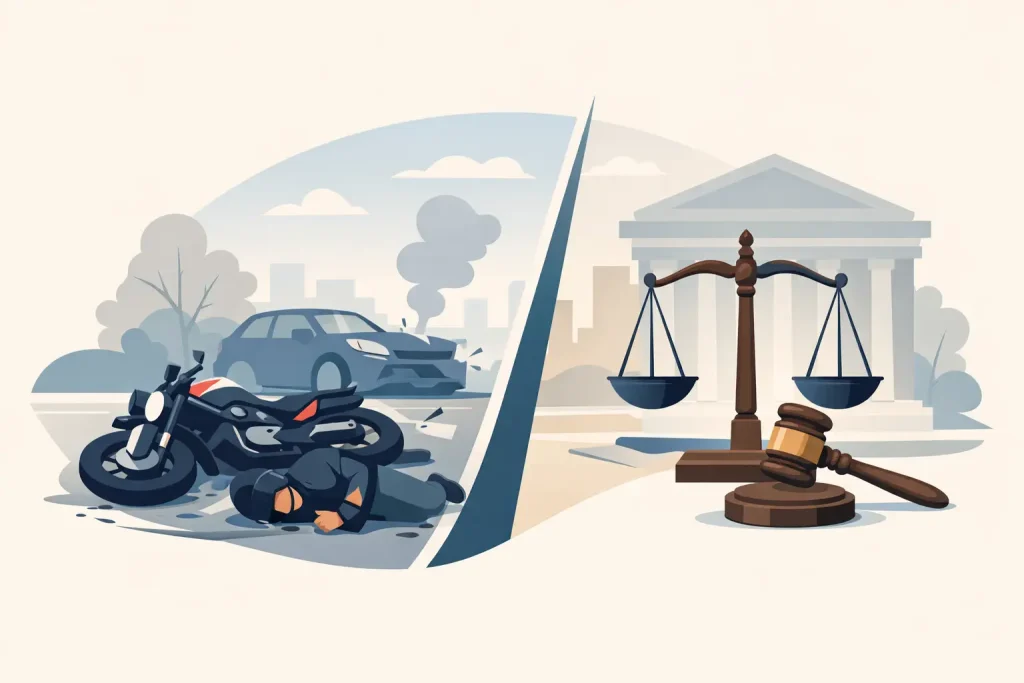
A motorcycle crash can change your life in a few seconds. One driver looks down at a phone, turns left too late, drifts into your lane, or claims they never saw you – and now you are dealing with medical bills, lost income, pain, and a bike that may be totaled. If you are asking, can I sue after a motorcycle accident, the short answer is yes, in many cases you can if someone else’s negligence caused the crash.
That said, filing a lawsuit is not the first step in every case, and not every accident turns into a courtroom fight. Most strong injury claims start with a careful investigation, a clear picture of fault, and a demand for full compensation. The real question is often not just whether you can sue, but whether doing so is necessary to recover what your case is truly worth.
Can I sue after a motorcycle accident if another driver caused it?
If another driver caused your motorcycle accident, you may have the right to bring a personal injury claim against that driver and, if necessary, sue for damages. In Arizona, negligence is the key issue. You generally need to show that another party failed to use reasonable care and that their conduct caused your injuries.
Common examples include drivers who turn left in front of a motorcycle, follow too closely, change lanes without checking blind spots, speed, drive impaired, or ignore traffic signals. These cases are rarely complicated in theory. The challenge is that insurance companies often try to shift blame onto the rider, even when the facts say otherwise.
Motorcyclists are often judged unfairly. Adjusters may suggest you were going too fast, riding aggressively, or took on extra risk simply by being on a motorcycle. That bias can affect settlement offers from the start. A serious claim needs evidence strong enough to cut through those assumptions.
Who can be sued after a motorcycle accident?
The at-fault driver is the most obvious defendant, but not always the only one. Depending on how the crash happened, more than one person or company may be legally responsible.
For example, if a commercial vehicle hit you, the employer may also be liable. If a bar overserved a visibly intoxicated driver, there may be additional claims to examine. If dangerous road conditions played a role, the public entity or contractor responsible for road design, maintenance, or signage may deserve scrutiny. In some situations, a defective motorcycle part, tire, brake system, or helmet may point to a product liability claim.
This is where a fast, local investigation matters. Skid marks fade, damaged bikes get repaired or discarded, surveillance footage disappears, and witnesses become harder to find. In serious cases, the early days after a wreck can shape the entire value of the claim.
When does a lawsuit become necessary?
A lot of people ask whether they have to sue to get compensation. Not always. Many motorcycle accident claims resolve through insurance negotiations, but a lawsuit may become necessary when the insurer refuses to be reasonable.
That usually happens when fault is disputed, injuries are severe, future treatment is expensive, or the insurer tries to minimize what your losses are worth. If you suffered fractures, head trauma, road rash with scarring, spinal injuries, or long-term disability, a quick settlement is often designed to protect the insurance company, not you.
A lawsuit can also be necessary when the other side denies responsibility outright or claims you were mostly to blame. Arizona follows a comparative fault system, which means you may still recover damages even if you were partly at fault, though your compensation can be reduced by your percentage of responsibility. That makes the fight over fault extremely important.
What compensation can I recover?
If you sue after a motorcycle accident, the goal is to recover damages that reflect the real harm you suffered. That includes more than the first stack of medical bills.
You may be able to recover compensation for emergency care, hospitalization, surgery, physical therapy, medication, future medical treatment, lost wages, reduced earning capacity, pain and suffering, emotional distress, scarring, disfigurement, and property damage. In especially serious cases, the biggest losses are often the ones that do not come with a simple receipt. A permanent shoulder injury, chronic back pain, or traumatic brain injury can affect your work, independence, sleep, and family life for years.
If a motorcycle accident leads to a fatality, certain surviving family members may have the right to pursue a wrongful death claim. Those cases involve different legal issues, but they are still centered on accountability and the financial and personal losses left behind.
What if I was not wearing a helmet?
This is one of the most common concerns riders have, and it deserves a direct answer. Not wearing a helmet does not automatically prevent you from bringing a claim.
Arizona’s helmet laws are limited, and many adult riders lawfully ride without helmets. Even so, the defense may argue that your injuries were worse because you were not wearing one. Whether that matters depends on the facts, the injuries involved, and the medical evidence. If your crash caused a broken leg or crushed wrist, the helmet issue may have little to do with those injuries. If the case involves head trauma, the argument may be more aggressive.
That does not mean the insurance company gets to deny everything. It means the case needs a careful analysis grounded in evidence, not stereotypes about motorcycles.
What if the other driver says they did not see me?
Not seeing a motorcyclist is not a legal defense. Drivers have a duty to watch the road, check mirrors, yield when required, and avoid preventable collisions.
In fact, many motorcycle crashes happen for exactly that reason – a driver failed to look carefully enough before turning, merging, or pulling out. Those cases can be strong when supported by crash reports, scene evidence, vehicle damage, witness statements, and, in some cases, expert reconstruction.
The same is true when a driver tries to blame the rider after the fact. People often change their story once they realize how badly a rider was hurt. A prompt investigation helps preserve the facts before they get reshaped by self-interest.
How long do I have to sue?
Arizona law limits the time you have to file a lawsuit. In many personal injury cases, the deadline is two years from the date of the accident. But there are exceptions, and some claims have much shorter notice requirements, especially when a government entity may be involved.
Waiting is risky. The longer you wait, the harder it may be to gather records, inspect evidence, locate witnesses, and build leverage against the insurer. A delay also gives the insurance company more room to argue that your injuries were not as serious as you say.
If you are asking can I sue after a motorcycle accident, do not wait until the deadline is close. By then, valuable evidence may already be gone.
What should I do before deciding whether to sue?
Start by protecting your health and your case at the same time. Get medical care, follow treatment recommendations, and keep records of what the crash has cost you physically, financially, and emotionally. If possible, preserve photos of the scene, the motorcycle, your injuries, and your gear.
Be careful with insurance communications. The adjuster may sound helpful, but their job is to limit payout. A recorded statement, a rushed settlement, or a casual comment about how you feel can all be used against you later.
This is also a good time to talk with a motorcycle accident attorney who understands how these claims are defended. A strong lawyer can assess fault, identify all available insurance coverage, calculate your damages realistically, and decide whether settlement pressure or a lawsuit is the right path. For injured riders in Northern Arizona, that kind of local, trial-ready guidance can make a real difference when the other side refuses to take your injuries seriously.
A motorcycle accident case is not just about whether you can sue. It is about whether you can hold the right people accountable and recover enough to move forward with some stability. If another party’s negligence put you in this position, you do not have to accept a weak offer or carry the burden alone.